Dominatrix and life coach

Viktoria Sway

Life coach, BDSM style.

I am Goddess Viktoria Sway, a Dominatrix and life coach. My coaching runs on empathy, authenticity, and somatic practice when you are face to face with the uncomfortable.

My passion is helping you become comfortable in your own skin. Transformational BDSM is more than dominance and submission: it is a way to find your inner truth and feel good being you. I bring calmness to your life when things get hard, and then I hold you to the growth you said you wanted.

Coaching with me uses BDSM to meet the parts of yourself that ordinary life suppresses. Play and charge bring emotional truth forward in ways talking alone cannot reach, and being seen there, by someone who stays steady, is what makes the change hold. The aim is less inner conflict and more contact with the full range of what you feel and want.

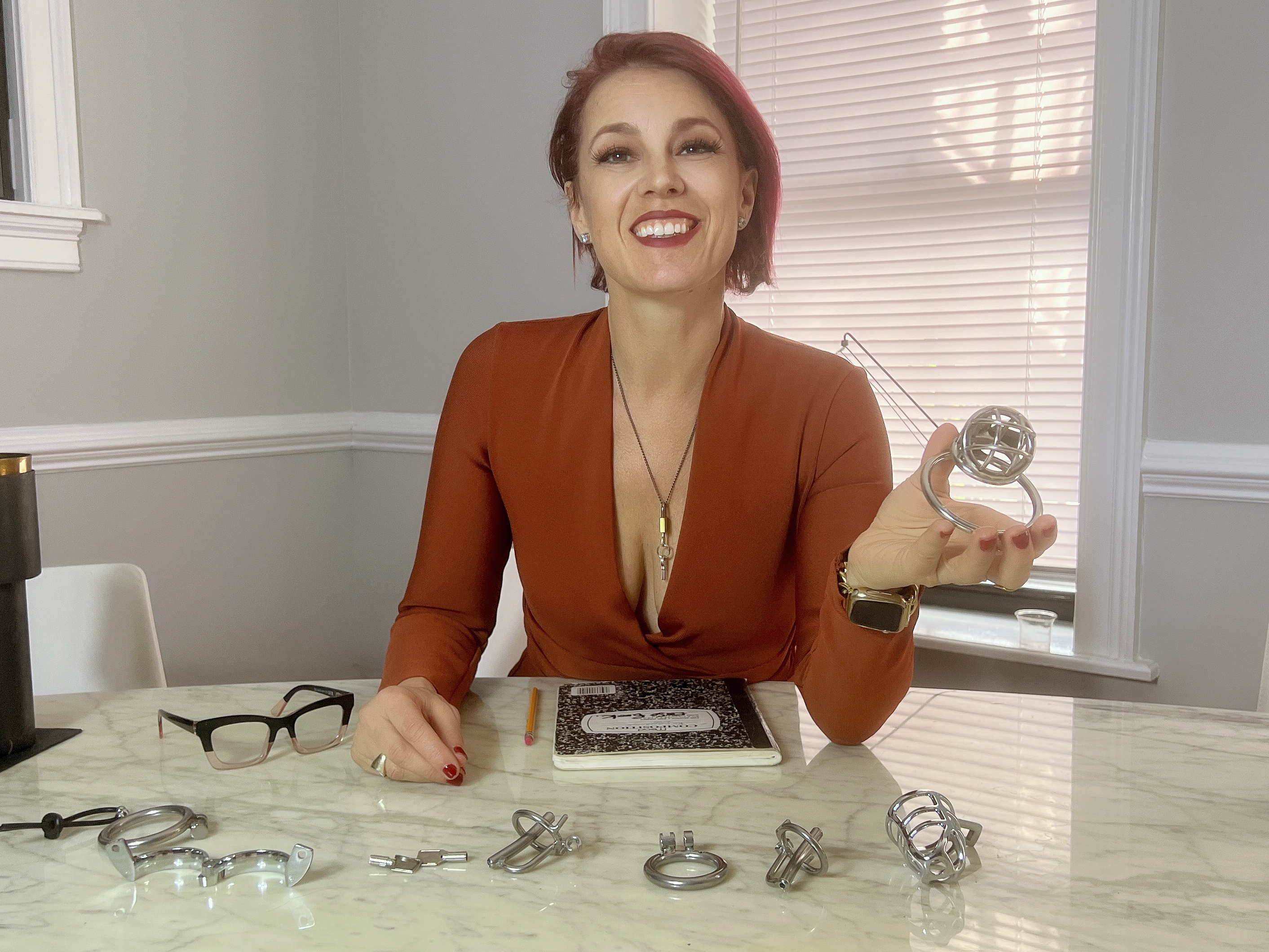
Viktoria Sway smiling at a marble table, teaching with chastity devices laid out

How I became a coach

I have always been drawn to helping people. It took three careers to find the form of it that fits: guiding individuals toward self-discovery and change, inside a dynamic with real teeth. Years of clients from every walk of life built the empathy this coaching runs on, and taught me what a supportive, non-judgmental guide actually changes for a person who has never had one.

Reading what cannot speak

An Animal Science degree from Michigan State, then years working with animals on farms. You learn to read what something needs when it cannot tell you. That reading is most of coaching, and it transferred more cleanly than anyone would guess.

Twelve years in medicine

Medical sales and management, with corporate leadership training attached: time management, goal setting, leading people. It also gave me a tolerance for saying uncomfortable things plainly, which matters more in coaching than charisma does.

Psychology

A second bachelor's degree, nearly finished. I kept watching things happen in sessions that I could describe but not explain, and I wanted the vocabulary and the research rather than my own anecdote. Human behavior has fascinated me my whole life.

Outside of this

I ride, train, and compete in eventing three days a week. I play hockey and I shout at the Red Wings. I take the food, the music, the shows, and the museums this city keeps producing.

Life coaching, BDSM, and psychology

The questions clients actually ask, answered the way I answer them in the room.

Is BDSM life coaching therapy?

No. Coaching points forward: goals, patterns, practice, and accountability for what you do next. Therapy treats; coaching trains. When older material surfaces that needs clinical holding, I say so plainly and point you to a licensed mental health professional, because getting the right kind of help first is what makes the other kind worth doing.

Why a Dominatrix instead of a traditional coach?

Accountability. A traditional coach asks how your week went. You answer to me, and that changes what you do before we ever talk about why. Add fifteen years of reading what people actually want underneath what they say they want, and you have a coach who can push where pushing works and hold still where it does not.

Do I need BDSM experience to be coached?

No. Curiosity is enough. The power dynamic is my method, and I calibrate it to you. Some clients come for their life and discover the dynamic teaches them faster than advice ever did. Others come specifically to grow into their dominance or submission. Both are coaching.

What does an engagement actually look like?

Sessions, one to one, over months. Between them you carry assignments and you report on what you did. I keep a small roster so each client gets real attention, and I close every engagement deliberately when it has done its job. If I am not the right fit I will tell you at the start, not after six sessions.

What is the difference between shadow and shame?

Shadow is the material you have disowned. Shame is the feeling that arrives in relation to it. People try to treat the shame and wonder why nothing shifts. In coaching we handle the disowned material, and the shame usually loses its grip on its own.

What is the difference between surrender and collapse?

Surrender is conscious yielding: you are choosing, and you are still there. Collapse is losing yourself. From the outside they can look similar. From the inside they feel nothing alike, and learning to tell them apart in your own body is one of the most practical things coaching gives you.

On the research

Studies suggest BDSM provides a consensual space for exploring identity, desire, and boundaries, and the literature consistently finds practitioners as psychologically healthy as anyone else, by some measures more so.

I cite it because stigma is what most clients arrive carrying, and watching the evidence fail to support the fear does something my reassurance cannot. Explore BDSM with a knowledgeable, supportive coach, and treat mental health with a licensed professional: the research and I agree on both.

Schedule an introduction

Selected reading

  • Wismeijer, A. A., & Van Assen, M. A. (2013). Psychological Characteristics of BDSM Practitioners. The Journal of Sexual Medicine, 10(8), 1943 to 1952.
  • Connolly, P. H. (2006). Psychological Functioning of Bondage/Domination/Sado-Masochism (BDSM) Practitioners. Journal of Psychology & Human Sexuality, 18(1), 79 to 120.
  • Barker, M., Iantaffi, A., & Gupta, C. (2007). Kinky clients, kinky counselling? The challenges and potentials of BDSM. In L. Moon (Ed.), Feeling Queer or Queer Feelings? Radical Approaches to Counselling Sex, Sexualities and Genders (pp. 106 to 124). London: Routledge.
  • Pascoal, P. M., Cardoso, D., & Henriques, R. (2015). Sexual Satisfaction and Distress in Sexual Functioning in a Sample of the BDSM Community. The Journal of Sexual Medicine, 12(4), 1052 to 1061.
  • Margolin, L. (2019). Consensual BDSM Facilitates Role-Specific Altered States of Consciousness: A Preliminary Study. Archives of Sexual Behavior, 48(2), 429 to 441.